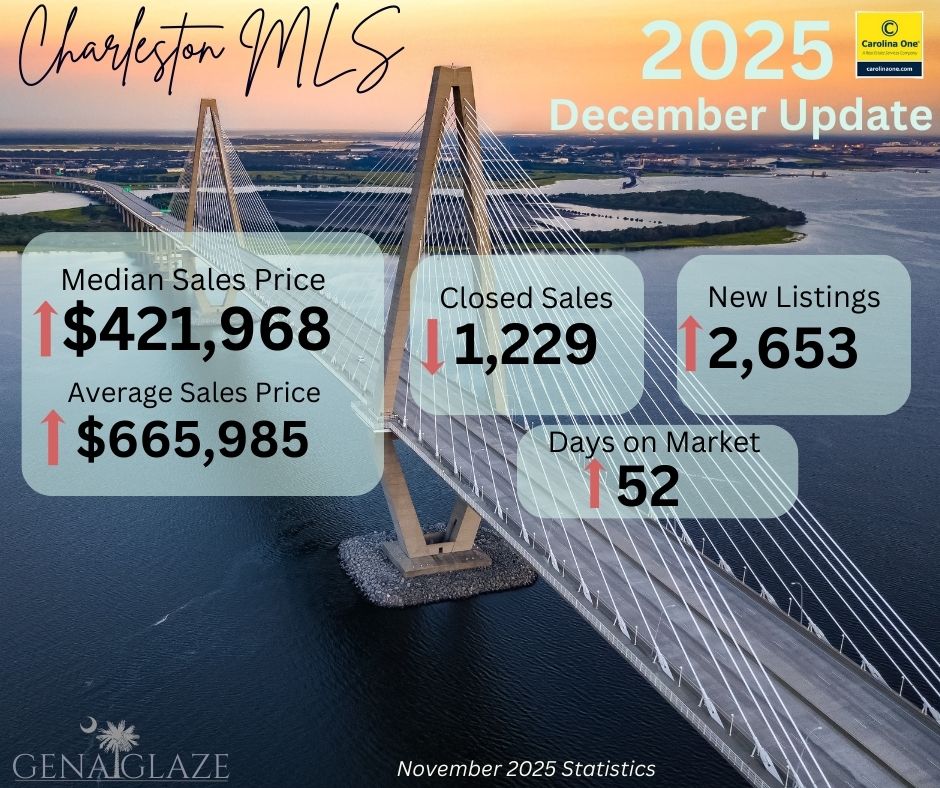
CLOSED SALES – There were1,229 closed sales in November of 2025, down-7.8% from November of 2024.
SALES PRICE – The median sales price closed out at $421,968 | up+0.6% year-over-year, and the average sales price for November 2025 was$665,985 | up+8.8%
PRICE PER SQFT – The average price per sqft for all residential property types was at $228 | up +3.2%
NEW WRITTEN SALES (Pending) – There were 1,286 new written sales in November 2025, up+4.0%
INVENTORY – Approximately 2,653 new listings (all property types) came online in November of 2025, which is up+4.4% with the average Days on Market at 52, up +8.3% and 3.5 months of inventory.
NEW CONSTRUCTION
New homes represent 28% of closed sales, which is down approximately 26%
The Takeaway: Closed sales dipped slightly, but with mortgage rates easing, more buyers are jumping back in, as seen in the rise in loan applications and new sales contracts. New listings climbed about 4%, adding to inventory and lengthening days on market, though we’re still short of the supply needed for a balanced market.
CLOSED SALES – There were1,379 closed sales in October of 2025, up 0.9% from October of 2024.
SALES PRICE – The median sales price closed out at $425,885 | up+2.0% year-over-year, and the average sales price for October 2025 was$653,949 | up +1.3%
PRICE PER SQFT – The average price per sqft for all residential property types was at $292, down -3.3%
NEW WRITTEN SALES (Pending) – There were 1,580 new written sales in October 2025, up +2%
INVENTORY – Approximately 2,134 | listings (all property types) came online in October of 2025, which is up+8.5% and the average Days on Market was at 54, up +22.7% with 3.2 months of inventory.
NEW CONSTRUCTION
New homes represent 37% of closed sales
18% of all closings in Charleston County were new construction
35% of all closings in Dorchester County were new construction
53% of all closings in Berkeley County were new construction
CLOSED SALES – There were 1,381 closed sales in September of 2025, up 8.9% from September of 2024.
PRICE PER SQFT – The average price per sqft for all residential property types was at $296,up 0.7%
SALES PRICE – The median sales price closed out at $423,930 in September 2025, up+3.4% over September of 2024 and the average sales price for August 2025 was $$634,965 The median sales price is still holding steady. It has been in a tight band between 400k and 425K most of the last 3 years.
NEW WRITTEN SALES (Pending) – There were 1,355 new written sales in September 2025, up 0.8% versus September 2024.
INVENTORY – Approximately 2,016 new listings (all property types) came online in September of 2025, which is up 0.1% from September 2024 and the average Days on Market was at 52 (up 20.9%) with 3.7 months of inventory
NEW CONSTRUCTION
New homes represent 23% of the available inventory
18% of all closings in Charleston County were new construction
35% of all closings in Dorchester County were new construction
53% of all closings in Berkeley County were new construction
Covenants, Conditions, and Restrictions (CCRs) are legal documents in real estate, common in planned communities and subdivisions. These recorded rules govern land use and development, establishing a framework for how properties within a specific area can be utilized. CCRs maintain community standards and can help preserve property value to ensure individual property use aligns with the neighborhood’s collective vision.
“Covenants” are promises by property owners to perform or refrain from specific actions, such as maintaining a home’s exterior or adhering to landscaping guidelines. “Conditions” are requirements for property ownership, often relating to improvements or obtaining approval for changes. “Restrictions” impose limitations on property use, which might include prohibitions on commercial activities or specific vehicle parking.
Common CCR’s
CCRs include rules and regulations for community standards. Architectural guidelines cover things like exterior paint colors, fencing materials, and home additions. Landscaping rules focus on lawn care, tree removal, and approved plant types. Pet restrictions might limit the number, size, or breed of animals and often include waste disposal requirements.
Parking rules may govern where vehicles can be parked, prohibit oversized vehicles or limit street parking. Limitations on property use, such as commercial businesses from operating from a residence or restricting short-term rentals could also be included in CCR’s.
Establishment and Enforcement
CCRs come into existence through a formal process, typically initiated by the developer of a planned community or subdivision. These documents are legally recorded with the county recorder’s office, making them part of the public record and binding on all current and future property owners within that community. This recording ensures that the rules “run with the land,” meaning they apply to the property itself, regardless of who owns it.
The Homeowners Association (HOA) may play a central role in enforcing CCRs once the community is established. Enforcement mechanisms vary but commonly include issuing warnings for minor infractions. For continued non-compliance, HOAs can levy fines, which may be assessed periodically until the violation is resolved. In more serious cases, an HOA might place a lien on the property for unpaid fines or assessments. Legal action, such as a lawsuit to compel compliance or recover damages, is another enforcement tool available to some HOAs.
Some governing documents may have a provision to amend the CCR’s, such as a vote of the majority of the members, but rules can vary.
Prospective buyers should review a property’s CCRs to understand their rights and obligations.
For communities without an HOA, CCRs might still be recorded, enforcement may be handled by a local municipality.
APR (Annual Percentage Rate) includes costs and fees associated with the loan. The interest rate does not. The interest rate is simply the rate you pay on the loan, excluding any other costs.
Looking at the interest rate alone is not an effective way to evaluate a loan. The APR is much more effective, as it factors in the interest rate PLUS any other costs to finance the loan, providing a much more holistic view.
When you apply for a loan, you should always be able to see both the interest rate and the APR. If you don’t, ask your lender to provide both.
If you compare two loans with the same interest rate (note rate) and the APR is higher on one – you should find out what the additional costs are. This comparison will help you evaluate the loan products more effectively.
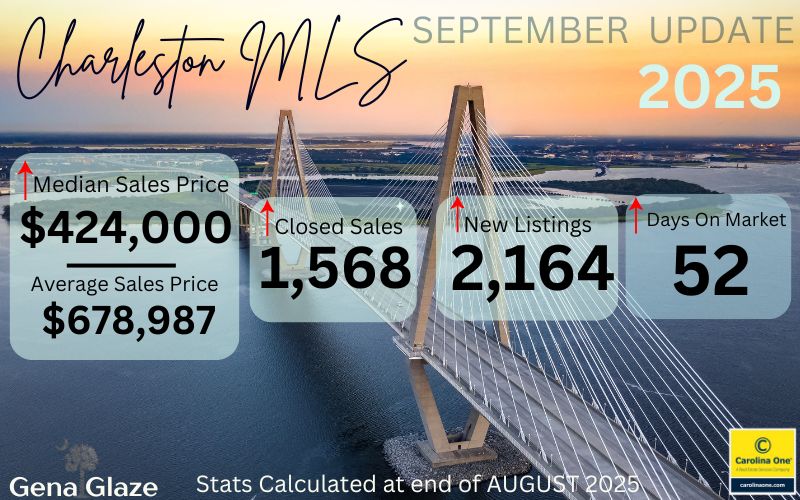
SALES PRICE – The median sales price closed out at $424,000 in August 2025, up+1.2% over August of 2024 and the average sales price for August 2025 was $678,987.
NEW WRITTEN SALES (Pending) – There were 1,568 new written sales in August 2025, up 11.9% versus August 2024. Approximately 480 of these sales were new construction, up+15.7%
CLOSED SALES – There were 1,547 closed sales in August of 2025, up 0.9% from August of 2024. New construction closed sales accounted for 28% of these sales, up +11.6%
INVENTORY – Approximately 2,164 new listings (all property types) came online in August of 2025, which is up +11.1% from August 2024 and the average Days on Market was at 52 (up 23.8%) with 4.1 months of inventory. 581 of August’s new listings were new construction, up 26.3% Previously owned homes (non-new construction) days on market was up+47.1%.
PRICE PER SQFT – The average price per sqft for all residential property types was at $230, up 3.6%.
SHOWINGS PER LISTING – 3.8 | down -7.3%
AUGUST STATS BY COUNTY:
Berkeley – The median sales price was $399,923 | up +0.2% The average sales price was $466,057 and the average days on market was 54. Closed sales (503) were up 0.6%, year over year, 45% of the closed sales were new construction (up 10%)
Charleston – The median sales price was $675,000 | up +12.5%. The average sales price was $1,031,255 and the average days on market was 49 | up+48.5%. Closed sales (652) | up +2.5% New Construction represented 12 % of these sales (up 65.2%).
Dorchester – The median sales price was $372,500 | up +0.5%. The average sales price was $385,433 and the average days on market was 41 | up +32.3%. Closed sales (317) were down -11.7%. New Construction represented 40% of the closed sales.
Homebuyers will soon have an added layer of protection when shopping around for a mortgage due to the new Homebuyers Privacy Protection Act. The new law is designed to prohibit the abuse of what’s known as trigger leads, which are when credit bureaus sell a borrower’s information immediately after a mortgage credit inquiry. The law makes it illegal for credit bureaus to do so without consumers’ consent.
“This new law is a major victory for mortgage borrowers that will protect them from the barrage of unwanted calls, texts, and emails they too often received immediately after applying for a mortgage,” said Mortgage Bankers Association President and CEO Bob Broeksmit. “It will create a more efficient, responsible, and respectful homebuying process when it goes into effect on March 5, 2026.”
SALES PRICE – The median sales price closed out at $430,000 in July 2025, up +1.2% over July of 2024 and the average sales price for July 2025 was $620,556
NEW WRITTEN SALES (Pending) – There were 1,577 new written sales in July 2025, up 11% versus July 2024.
CLOSED SALES – There were 1,719 closed sales in July of 2025, up 7.4% from July of 2024.
INVENTORY – Approximately 2,290 new listings (all property types) came online in July 2025, which is up +5% from July 2024 and the average Days on Market was at 45 with 3.6 months of inventory (up 16%). 1712 of July’s new listings were existing homes (non-new construction) this category is at 3.9 months of inventory, up 30%
PRICE PER SQFT – The average price per sqft for all residential property types was at $289 but for resales (non-new construction) it was calculated at $311 / sqft. Despite a fairly stable Median Sale Price, this increase in price per sqft suggests consumers are getting a smaller house for the money (higher Sold $/sqft).
New Construction – New construction represents about 36% of the closings in MLS. In Berkeley County new construction represents 56% of all closed sales.
JULY STATS BY COUNTY:
Berkeley – The median sales price was $395,000 | down -0.3%. The average sales price was $500,965 and the average days on market was 45 | up +21.6%
Charleston – The median sales price was $623,225 | down -1.7%The average sales price was $870,712 and the average days on market was 39 | up +25.8%
Dorchester – The median sales price was $389,500 | up +2.3%. The average sales price was $417,491 and the average days on market was 42 | up +20%
JULY STATS – QUICK VIEW OF MUNICIPLAITIES:
Goose Creek– The median sales price was $314,900 | down -4.3% The average sales price was $317,088 |
Hanahan – The median sales price was $365,000 | down -1.3%, The average sales price was $431,131
Summerville – The median sales price was $399,990 | no change 0.0%, The average sales price $431,092
North Charleston – The median sales price was $346,450 | down -0.4% The average sales price was $392,508
Charleston / West Ashley – The median sales price was $585,000 | down -8.5% The average sales price was $875,381
Mount Pleasant -The median sales price was $955,000 | up +9.1%, The average sales price was $1,127,187
Daniel Island -The median sales price was $1,600,000 | up +7.4% The average sales price was $1,314,444
James Island The median sales price was $338,000 | down -47.6%, The average sales price was $338,000
February 2024 Update for the entire Charleston MLS:
NEW SALES – Pending – There were 1379 new written sales in January 2025, down -6.1% versus January of 2024.
CLOSED SALES – There were 1045 closed sales in January of 2025, up 2.8% from January of 2024
SALES PRICE – The Median sales price closed out at $415,917, up 0.2% over January of 2024 and the average sales price for January 2024 was $631,715
INVENTORY – Approximately 1,907 new listings came online in January 2025, which is up +2.3% from January 2024 and the average Days on Market was at 50, up 28.2% from January of 2024 with 2.7 months of inventory.
In today’s market, more and more home buyers are getting assistance with their down payment in the form of gift funds from friends and family. According to a recent study, in 2023, 39% of home buyers who financed their home with a mortgage loan used gifted funds as at least one source for their down payment, up nine percentage points from 2018. While it’s great to have help, there are rules around financial gifts that you need to know in order to smoothly navigate the process.
What is a down payment gift?
Down payment money is considered a “gift” when people, usually friends or family, financially contribute money that will help the home buyer pay for a down payment on a home. there is generally no limit on how much a borrower is allowed to receive as a gift
Who is eligible to Gift you down payment money?
Depending on the loan type, gifts can come from the buyer’s relative, employer, or close friend with a “clearly defined and documented” interest in the borrower, or a charitable organization, governmental agency, or a public entity that has a program providing home ownership assistance for low and moderate-income families or first-time home buyers. However, donations for down payments cannot come from people who are directly affiliated with the home buying transaction which includes builders, developers, or real estate agents.
What are the rules for mortgage down payments?
For Fannie Mae backed loans, a minimum borrower contribution from the borrower’s own funds is not required. This means that 100% of the money that is needed to make up the down payment can come from a gift. On the other hand, with FHA loans, the borrower is required to provide a minimum personal cash investment of at least 3.5% for the down payment. regardless of the loan type, gift funds must be a “bona fide gift,” and not a loan that requires repayment.
While there is no limit to how much money you can accept as a gift for a home down payment, when you’re going through the mortgage loan application process, you’ll need to make sure that you have proper documentation of the gift money in the form of a letter, with specific requirements outlined by your lender, from the donor of the funds. this is required to show your letter that you don’t owe someone a large sum of money that you won’t be able to pay back on top of your monthly mortgage payment.