Tag Archives: news

Covenants, Conditions, and Restrictions

Covenants, Conditions, and Restrictions (CCRs) are legal documents in real estate, common in planned communities and subdivisions. These recorded rules govern land use and development, establishing a framework for how properties within a specific area can be utilized. CCRs maintain community standards and can help preserve property value to  ensure individual property use aligns with the neighborhood’s collective vision.

“Covenants” are promises by property owners to perform or refrain from specific actions, such as maintaining a home’s exterior or adhering to landscaping guidelines. “Conditions” are requirements for property ownership, often relating to improvements or obtaining approval for changes. “Restrictions” impose limitations on property use, which might include prohibitions on commercial activities or specific vehicle parking.

Common CCR’s

CCRs include rules and regulations for community standards. Architectural guidelines cover things like exterior paint colors, fencing materials, and home additions. Landscaping rules focus on lawn care, tree removal, and approved plant types. Pet restrictions might limit the number, size, or breed of animals and often include waste disposal requirements.

Parking rules may govern where vehicles can be parked, prohibit oversized vehicles or limit street parking. Limitations on property use, such as commercial businesses from operating from a residence or restricting short-term rentals could also be included in CCR’s.

Establishment and Enforcement

CCRs come into existence through a formal process, typically initiated by the developer of a planned community or subdivision. These documents are legally recorded with the county recorder’s office, making them part of the public record and binding on all current and future property owners within that community. This recording ensures that the rules “run with the land,” meaning they apply to the property itself, regardless of who owns it. 

The Homeowners Association (HOA) may play a central role in enforcing CCRs once the community is established. Enforcement mechanisms vary but commonly include issuing warnings for minor infractions. For continued non-compliance, HOAs can levy fines, which may be assessed periodically until the violation is resolved. In more serious cases, an HOA might place a lien on the property for unpaid fines or assessments. Legal action, such as a lawsuit to compel compliance or recover damages, is another enforcement tool available to some HOAs.

Some governing documents may have a provision to amend the CCR’s, such as a vote of the majority of the members, but rules can vary.  

Prospective buyers should review a property’s CCRs to understand their rights and obligations.

For communities without an HOA, CCRs might still be recorded, enforcement may be handled by a local municipality.
Gena Glaze

Leave a comment

Filed under Home Buying (For Buyers), Learn Real Estate Terms, Selling Real Estate (For Sellers), Stories, News & Events

Lowcountry Lowline is Officially Launching It’s First Phase

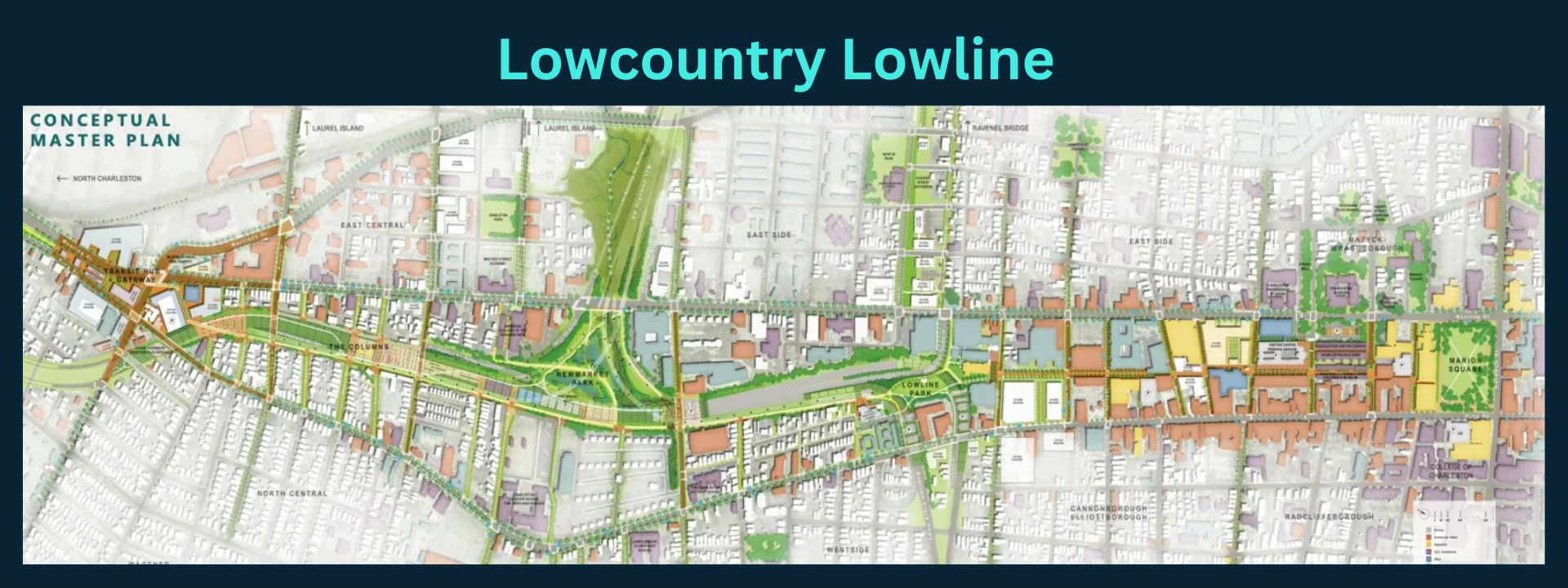
The Lowline project envisions a central spine of parks and mobility systems connecting downtown to West Ashley, North Charleston and Mt Pleasant. The plan will transform an abandoned rail line and neglected highway corridor into a continuous green corridor that supports the surrounding communities and provides places for active and passive recreation.. 

Charleston City Council recently approved a $1.1 million design-build contract, officially launching the first phase of construction for this long-awaited project. A community open house is scheduled for Thursday, April 24th from 5:00 to 6:30 p.m. at Palmetto Brewing Company, located at 289 Huger Street in Charleston.

THE NORTH CENTRAL CORRIDOR:

  • The North Central Corridor runs from Romney Street to the planned transit hub on Mount Pleasant Street
  • The North Central Corridor provides areas for active and passive recreation in “The Columns” beneath the elevated highway
  • “The Columns” area also provide ample space to host a neighborhood market
  • This district will include pocket parks where neighborhood streets end into the Lowline property
  • The potential transit oriented redevelopment of the Parks Department building provides an opportunity to create a new pedestrian district at the North end of the Lowline

THE PARKS

  • The Parks District runs from Romney Street to Line Street
  • It is bookended by two new park spaces: New Market Creek Park to the North and Lowline Park to the South
  • Lowline Park is a large open space designed for events and gatherings
  • NewMarket Park is an enhanced Salt- and Fresh- water ecosystem
  • NewMarket Park provides a natural amenity for the public to enjoy while also enhancing stormwater management for the surrounding neighborhoods

THE URBAN CORE

  • The Urban Core District of the Lowline runs from Line Street to Marion Square
  • The District currently has the most diverse mix of uses and the highest density on the peninsula
  • The Lowline in the Urban Core is envisioned to be a series of alleys
  • Some portions of the Lowline already exist as alleys between Mary and Hutson Street
  • The side streets that connect King and Meeting streets will become important access points. Improvements to these connecting streets will be included in the Lowline
  • This Network of interconnected pedestrian walkways will enhance the entire district

Read More at Lowcountry Lowline

Gena Glaze

Leave a comment

Filed under Charleston Area Growth and Development, Places, Real Estate (Market info)

One Man’s Land is A Battleground For A Looming Mega Housing Development in Berkeley County SC

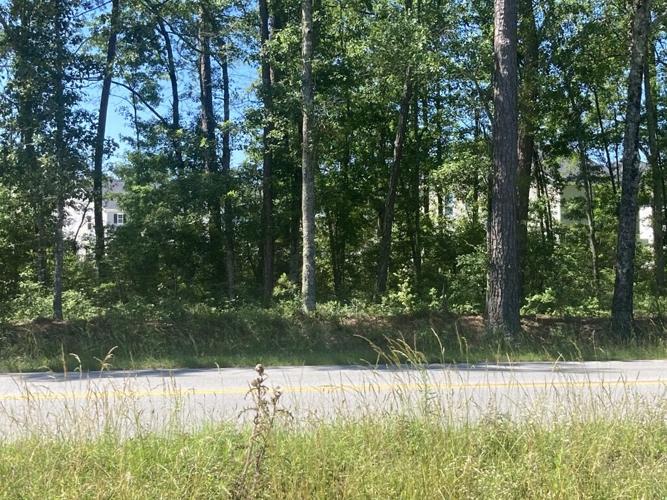
A Berkeley County property owner can peek through a stand of trees across the road and see part of Cane Bay Plantation.  The other side of his land overlooks 1,700 acres of undeveloped land where Seattle-based Weyerhaeuser, the nation’s largest timber tract owner, wants to build another large-scale residential project.

Mr. Burbage Smoak’s property along the heavily traveled, two-lane Black Tom Road stands in the way of any plans Weyerhaeuser might have and Berkeley County Council appears determined to keep it that way.

Smoak’s vacant property includes 421 acres southwest of Moncks Corner, most of it is wetlands. However, He wants to build a strip of commercial buildings on 80 acres that front Black Tom Road — maybe some medical offices or retail space, something that will “support the residents of that area,” according to Kevin Berry, president of Earthsource Engineering, who is representing the landowner.

“We’re not just trying to put more residential rooftops in the area,” he said, adding he’s keenly aware of county council’s desire to slow residential growth so new roads and other critical infrastructure can catch up.

“The public sentiment, and they’ve articulated it well, is there’s frustration when development comes before infrastructure,” said county supervisor Johnny Cribb.

Read More at Post and Courier

Gena Glaze

Leave a comment

Filed under Charleston Area Growth and Development, People, Real Estate (Market info), Stories, News & Events