Category Archives: Learn Real Estate Terms

Covenants, Conditions, and Restrictions

Covenants, Conditions, and Restrictions (CCRs) are legal documents in real estate, common in planned communities and subdivisions. These recorded rules govern land use and development, establishing a framework for how properties within a specific area can be utilized. CCRs maintain community standards and can help preserve property value to  ensure individual property use aligns with the neighborhood’s collective vision.

“Covenants” are promises by property owners to perform or refrain from specific actions, such as maintaining a home’s exterior or adhering to landscaping guidelines. “Conditions” are requirements for property ownership, often relating to improvements or obtaining approval for changes. “Restrictions” impose limitations on property use, which might include prohibitions on commercial activities or specific vehicle parking.

Common CCR’s

CCRs include rules and regulations for community standards. Architectural guidelines cover things like exterior paint colors, fencing materials, and home additions. Landscaping rules focus on lawn care, tree removal, and approved plant types. Pet restrictions might limit the number, size, or breed of animals and often include waste disposal requirements.

Parking rules may govern where vehicles can be parked, prohibit oversized vehicles or limit street parking. Limitations on property use, such as commercial businesses from operating from a residence or restricting short-term rentals could also be included in CCR’s.

Establishment and Enforcement

CCRs come into existence through a formal process, typically initiated by the developer of a planned community or subdivision. These documents are legally recorded with the county recorder’s office, making them part of the public record and binding on all current and future property owners within that community. This recording ensures that the rules “run with the land,” meaning they apply to the property itself, regardless of who owns it. 

The Homeowners Association (HOA) may play a central role in enforcing CCRs once the community is established. Enforcement mechanisms vary but commonly include issuing warnings for minor infractions. For continued non-compliance, HOAs can levy fines, which may be assessed periodically until the violation is resolved. In more serious cases, an HOA might place a lien on the property for unpaid fines or assessments. Legal action, such as a lawsuit to compel compliance or recover damages, is another enforcement tool available to some HOAs.

Some governing documents may have a provision to amend the CCR’s, such as a vote of the majority of the members, but rules can vary.  

Prospective buyers should review a property’s CCRs to understand their rights and obligations.

For communities without an HOA, CCRs might still be recorded, enforcement may be handled by a local municipality.

Gena Glaze

Leave a comment

Filed under Home Buying (For Buyers), Learn Real Estate Terms, Selling Real Estate (For Sellers), Stories, News & Events

APR vs. Interest Rate

Is there a difference?

APR (Annual Percentage Rate) includes costs and fees associated with the loan. The interest rate does not. The interest rate is simply the rate you pay on the loan, excluding any other costs.

Looking at the interest rate alone is not an effective way to evaluate a loan. The APR is much more effective, as it factors in the interest rate PLUS any other costs to finance the loan, providing a much more holistic view.

When you apply for a loan, you should always be able to see both the interest rate and the APR. If you don’t, ask your lender to provide both.

If you compare two loans with the same interest rate (note rate) and the APR is higher on one – you should find out what the additional costs are. This comparison will help you evaluate the loan products more effectively.

Leave a comment

Filed under Learn Real Estate Terms

Median Sales Price Vs Average Sales Price

The average sale price is determined by totaling all the sale prices of homes sold in a specific area over a set time period and dividing by the number of properties sold. However, if a property or two sells at an unusually high or low price, it can distort the average, making it an unreliable metric in certain situations.
The median sale price is the price right in the middle of a dataset. It shows the point where half the properties in an area sell for more and the other half sell for less. This figure is a reliable way to track market trends over time.

Average and median sales prices are both useful methods for analyzing data, but they serve different purposes.

Gena Glaze

Leave a comment

Filed under Home Buying (For Buyers), Learn Real Estate Terms, Real Estate (Market info)

SC Real Estate Property Tax Discounts

Owner Occupant Rate

As a general rule in South Carolina, legal residences are taxed based on a 4% assessment ratio. Only owner-occupants are eligible to apply for the 4% special assessment. If the property has any rented residences on it or any business for profit, the 4% assessment does not apply. Investment properties are typically taxed at a higher rate – usually a 6% assessment ratio. However, you must apply to receive the lower owner-occupied rate. Check with your county’s Tax Assessors office for full details and see if you meet the qualifications of the 4% assessment ratio.

The Homestead Exemption

The Homestead Exemption is an exemption of taxes on the first $50,000 of Fair Market Value of your Legal Residence for homeowners over age 65, totally and permanently disabled, or legally blind.  If you think you may qualify for the Homestead Exemption, contact the County Auditor’s Office for full details of the reduction and information about the application process.

Gena Glaze

Leave a comment

Filed under Home Buying (For Buyers), Learn Real Estate Terms

What is Title Insurance? A Basic Overview.

Title insurance is a form of indemnity insurance that protects lenders and homebuyers from financial loss that could be sustained from defects in a title to a property. The two basic types are The lender’s title insurance, which the borrower purchases to protect the lender and the other type is the owner’s title insurance.

A title search is completed before title insurance is issued. This is an examination of public records to determine and confirm a property’s legal ownership and determine whether there are any claims to the property. The goal is to pass “clear title”, free of any encumbrances or claims, to the new purchaser.

Title insurance protects against loss or damage occurring from liens, encumbrances, or defects in a property’s title that were unable to be detected during the title search. Some common claims that could subsequently be filed against a title are back taxes, liens, conflicting wills, forgeries and / or survey disputes. Unlike traditional insurance, which protects against future events, title insurance protects against claims for past occurrences.

Almost all lenders require the borrower to purchase a lender’s title insurance policy (usually detailed in the lender’s closing costs).  A lender’s policy only protects the lender against loss.  Buyers, at closing, typically have the option of purchasing an owner’s title policy that helps protects them from financial loss.

Since title searches are not infallible and an owner of real estate remains at risk of financial loss, it is wise to purchase protection in the form of an owner’s title insurance policy.

A basic owner’s title insurance policy typically covers the following hazards:

  • Encumbrances or judgments against property
  • Flawed records
  • Property border disputes
  • Encroachments
  • Easement disputes
  • Forged documents
  • Third-party claims
  • Errors in recorded documents
  • Incorrect property deed

Title insurance costs in South Carolina range from 0.5% to 1% of your home sale price. It’s a one-time fee, and the coverage lasts as long as you or your heirs own the property.

The legal costs to defend your title from any one of the title defects mentioned would far outweigh the cost of title insurance, thus making it a sensible purchase.

Gena Glaze

Leave a comment

Filed under Home Buying (For Buyers), Learn Real Estate Terms

Capital Gains Tax and Exclusions.

A capital gain is the profit made when selling an investment or asset, including real estate. The capital gains tax is the levy on that profit when an investment is sold. It is owed for the tax year during which the investment is sold.

Long-term capital gains tax is the tax levied on profits of an asset or investment that was owned for over one year. The long-term capital gains tax rate vary and depend on your income but the rates are typically lower than your ordinary income tax rate

If the investment or asset is owned for less than a year when the gain is made, then the  short-term capital gains tax applies. The short-term rate is typically determined by the taxpayer’s ordinary income bracket – but can vary in some circumstances.

The Primary Residence Exclusion. IRS – Section 121

The Internal Revenue Service (IRS) allows homeowners to exclude a certain amount of gains that result from the sale of their primary home from their income. This is known as the Section 121 rule.

Single Homeowners may exclude up to $250,000 of gains on the sale of their property, and married homeowners filing jointly can exclude up to $500,000.

To be eligible for these exclusions You must have owned the home for at least two years AND have lived in the home as your primary residence for at least two years of the previous five years prior to the sale date. The two-year period does not have to be consecutive. See More Here at IRS

Investment Property Deferment- 1031 Tax Exchange in Real Estate

Section 1031 is a provision of the Internal Revenue Code (IRC) that allows a businesses or the owners of investment property to defer federal taxes on some exchanges of real estate.  The provision is used by investors who are selling one property and reinvesting the proceeds in one or more other properties.

Qualifying Section 1031 exchanges are called 1031 exchanges, or like-kind exchanges.

In General, A 1031 exchange allows investors to defer taxes on the profits of sold investments. The exchange can be complex with rigid time frames for identifying the replacement property and reqiures a Qualified Intermediary (QI) to oversee and process and the funds.

Tax laws and codes are complex and can change, always consult a tax professional to review your unique situation.

More Info at IRS

Gena Glaze

Leave a comment

Filed under Home Buying (For Buyers), Learn Real Estate Terms, Real Estate (Market info), Selling Real Estate (For Sellers)

What is a 2-1 Buydown?

Sellers, including home builders, will sometimes use 2-1 buydowns as an incentive for potential purchasers

A 2-1 buydown is a concession or incentive negotiated with a seller or builder that temporarily reduces a buyer’s mortgage interest rate by 2 percentage points the first year and 1 percentage point the second year of your mortgage. The third year the interest rate goes back to the fixed rate obtained from the lender.

  • A 2-1 buydown is a type of financing that lowers the interest rate on a mortgage for the first two years before it rises to the regular, permanent rate.
  • The rate is typically two percentage points lower during the first year and one percentage point lower in the second year.
  • Sellers, including home builders, may offer a 2-1 buydown to make a property more attractive to buyers.
  • 2-1 buydowns can be a good deal for homebuyers, provided that they will be able to afford the higher monthly payments once those begin.

Lenders charge an additional fee to make up for the interest that they won’t be receiving in those early years. A homebuyer or seller can pay for a buydown. That payment may be in the form of mortgage points, or a lump sum deposited in an escrow account with the lender and used to subsidize the borrower’s reduced monthly payments.

The 2-1 buydown is sometimes offered as an incentive and sometimes it is part of the buyer’s negotiations.

Example

Suppose a new home builder is offering a 2-1 buydown on its new homes. If the prevailing interest rate on 30-year mortgages is 6% for a particular buyer, this homebuyer could get a mortgage that charged just 4% in the first year, then 5% in the second year, and 6% starting in year three and continuing through the remaining years. The reduced payments in those first two years can result in substantial savings.

Gena Glaze

Leave a comment

Filed under Home Buying (For Buyers), Learn Real Estate Terms, Mortgage Info

What is a CL-100?  S.C. Real Estate

A CL100 refers to a specialized inspection completed by a licensed pest control company and documented on the Clemson form 100. It is the official Wood Infestation Report for South Carolina.  The reports are only valid for 30 days and are a common inspection performed in a real estate transaction.

The Department of Pesticide Regulations at Clemson University is the enforcement and investigative authority in the state of South Carolina for pesticide use, alleged pesticide misuse, sub-standard termite treatments, and wood infestation reports.

A Wood Infestation Report is a report of visible infestation of damage caused by insects (e.g., termites and beetles) and active wood destroying fungi / decay (moisture damage) in accessible areas of the structure, with the inspection for decay fungi usually limited to the portion of the structure below the level of the first main floor. 

The CL100 is often referred to as “The Termite Inspection” but the inspection includes more than an inspection of active termites, it also details previous termite damage and other types of wood-destroying organisms and moisture conditions.

For more information, Contact Gena Glaze

Leave a comment

Filed under Learn Real Estate Terms, Real Estate (Market info)

Home Buying Lingo!

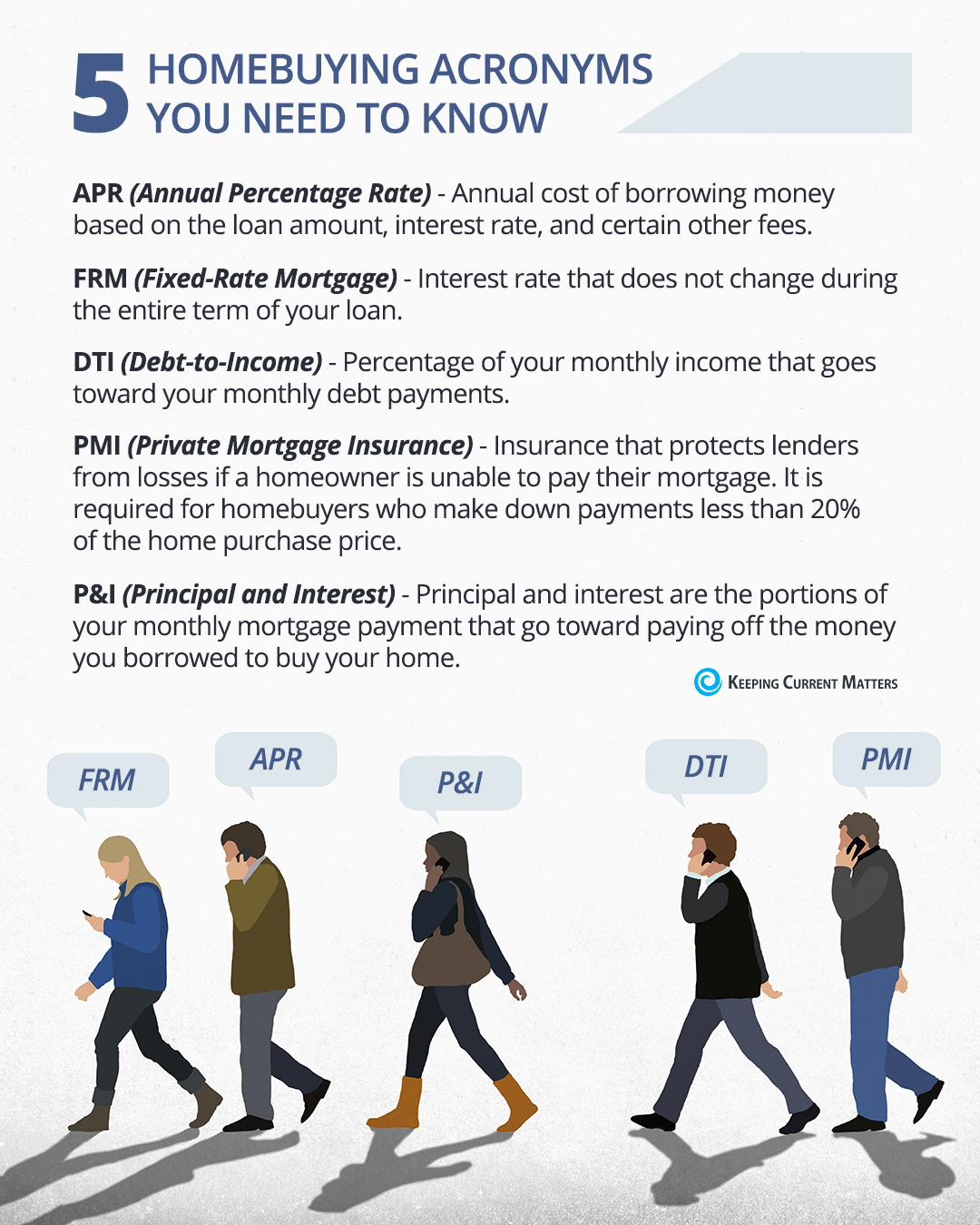
Illustration of people with speech bubbles using mobile phones while walking on street against clear

Some Highlights:

  • Learning the lingo of homebuying is an important part of feeling successful when buying a home.
  • From APR to P&I, you need to know the acronyms that will come up along the way, and what they mean when you hear them.
  • Your local professionals are here to help you feel confident and informed from start to finish…and this infographic will help you as you go.

Leave a comment

Filed under Learn Real Estate Terms, Real Estate (Market info)