The National Association of REALTORS® unveiled the top 10 homebuying hot spots for 2026 in a new report, Housing Hot Spots for 2026: The Markets Poised for New Buyer Opportunities. Charleston was among the selected. These top 10 housing hot spots consist of markets that outperform the average market in the U.S. on at least five of 10 economic, demographic, and housing indicators, have populations above 250,000, and demonstrate meaningful 2026 opportunities for homebuyers.
NAR senior economist Nadia Evangelou stated that, “Charleston is a metro that stands out from the crowd”. The city’s inventory is growing at the right price points, offering would-be buyers’ greater affordability than many other locations.
Population growth in the metro remains among the fastest in the area, fueled by both millennial households and high-income transplants from the Northeast. Additionally, income growth in Charleston is 6% year over year, while job growth is up 3.2% compared to 2024.
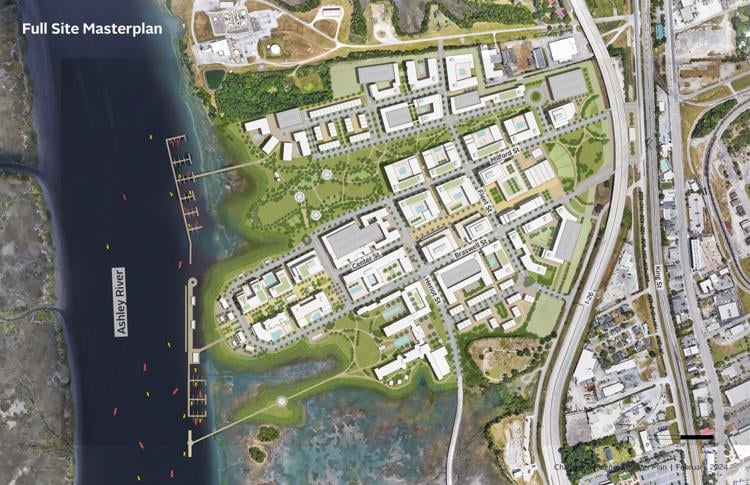
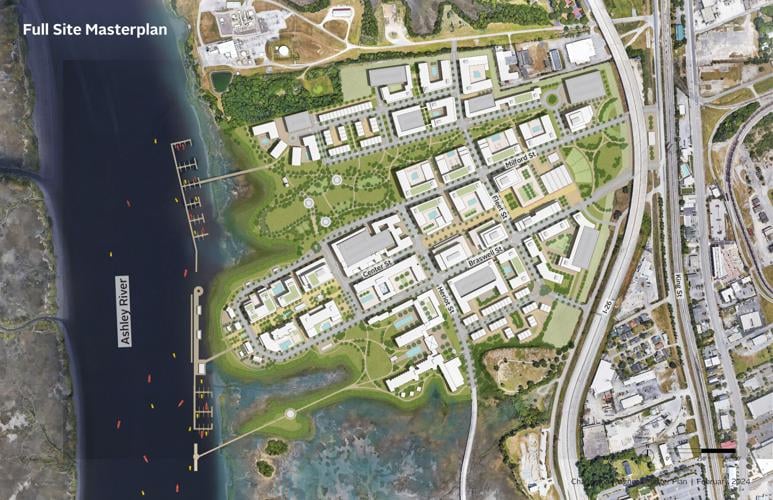
Magnolia Landing, the long-planned $2 billion mixed-use development on the upper peninsula has named its first residential developer.
Toll Brothers, a high-end housing developer in the Lowcountry, will be building luxury townhomes for the first phase of the work-live-play development in Charleston. Long-term plans for the marathon 5.9 million-square-foot development call for up to 4,080 multifamily housing units, 1.2 million square feet of commercial space and 1,080 hotel rooms, with about 25 acres set aside for parks.
The residences will be a mix of market-rate and affordable housing situated on the Charleston neck area along the Ashley River.
The project is being developed by Highland Resources, which purchased a major portion of the property at a courthouse auction in 2018 and then went to worked to clean up the contaminated soil.
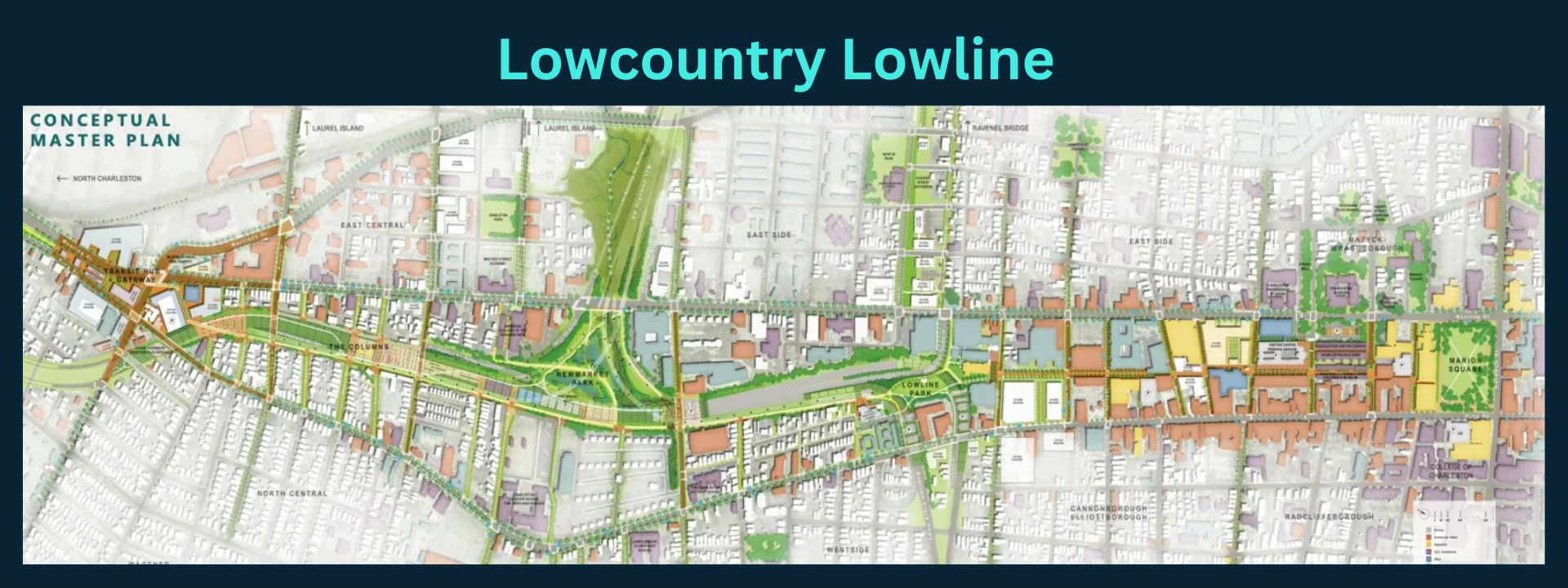
The Lowline project envisions a central spine of parks and mobility systems connecting downtown to West Ashley, North Charleston and Mt Pleasant. The plan will transform an abandoned rail line and neglected highway corridor into a continuous green corridor that supports the surrounding communities and provides places for active and passive recreation..
Charleston City Council recently approved a $1.1 million design-build contract, officially launching the first phase of construction for this long-awaited project. A community open house is scheduled for Thursday, April 24th from 5:00 to 6:30 p.m. at Palmetto Brewing Company, located at 289 Huger Street in Charleston.
THE NORTH CENTRAL CORRIDOR:
The North Central Corridor runs from Romney Street to the planned transit hub on Mount Pleasant Street
The North Central Corridor provides areas for active and passive recreation in “The Columns” beneath the elevated highway
“The Columns” area also provide ample space to host a neighborhood market
This district will include pocket parks where neighborhood streets end into the Lowline property
The potential transit oriented redevelopment of the Parks Department building provides an opportunity to create a new pedestrian district at the North end of the Lowline
THE PARKS
The Parks District runs from Romney Street to Line Street
It is bookended by two new park spaces: New Market Creek Park to the North and Lowline Park to the South
Lowline Park is a large open space designed for events and gatherings
NewMarket Park is an enhanced Salt- and Fresh- water ecosystem
NewMarket Park provides a natural amenity for the public to enjoy while also enhancing stormwater management for the surrounding neighborhoods
THE URBAN CORE
The Urban Core District of the Lowline runs from Line Street to Marion Square
The District currently has the most diverse mix of uses and the highest density on the peninsula
The Lowline in the Urban Core is envisioned to be a series of alleys
Some portions of the Lowline already exist as alleys between Mary and Hutson Street
The side streets that connect King and Meeting streets will become important access points. Improvements to these connecting streets will be included in the Lowline
This Network of interconnected pedestrian walkways will enhance the entire district
The neighborhood work club is launching its first Charleston location on Rutledge Avenue, next to Hampton Park. The space will feature high ceilings, skylights, and a library. The 5,000-sqft building was once a supermarket back in the 1970s.
The space is designed for working, hanging out, reading a book, meetings or just to grab a coffee. Locally roasted coffee is free 24/7 for members.
Quick facts:
250 memberships will be available.
Members will have 24/7 access to the space.
A membership will grant access to all work clubs across the country.
Phone booths and meeting rooms on-site will also be available.
Memberships are $100 a month + you can cancel at any time.
CEO and Founder Michael Tavani said “There’s a growing need for that ‘third place for work’ in this city and beyond — a space that’s not your home or office, but somewhere to mix it up. Charleston is one of our favorite cities in the world, chock full of iconic neighborhoods, so it was an obvious choice for us to plant a flag here.”
Memberships go live on Thursday, April 24, at 10 a.m. Sign up for early access to memberships and sneak peek invites.
The Long Savanah development will be broken up into three main parts: a city park, a county park and a 1,200-acre residential area. The development agreement allows for 4,500 residential units, with 675 allocated to the workforce housing.
Other developments, within a five-mile radius of the development, along Bees Ferry Rd and Glen McConnel Parkway are being planned. The total housing units in this corridor will top 6,000 once completed
Other Developments include:
The Davis Development: 337
The Davis Development that is currently clearing the corner of Bees Ferry and Sanders roads for a 337-unit multifamily complex. The Plans call for eight buildings with a maximum height of 55 feet, with each containing 30 to 80 rental units.
Ashley Walk Townes: 57
Ashley Walk Townes, The new Beazer townhome community has already sold out phase one, but a second is now open with homes starting at $404,990. Two floorplans call for three- and four-bedroom options spanning 2,100 to 2,300 square feet.
Affordable housing: 180
Charleston City Council approved rezoning a 17-acre property by Verdier Road to accommodate 180 affordable housing units . The project is still in the works and now includes a commercial aspect, including a potential daycare within the parcel.
Verdier Pointe: 101
Pennsylvania-based builder Toll Brothers is in the midst of constructing 101 single-family attached homes in the Verdier Pointe. The neighborhood runs along Claret Cup Way and Verdier Boulevard, which intersect with Bees Ferry Road. Four floorplans range from 1,500 to 2,000 square feet with prices starting at $452,000.
WEM Apartments: 250
A North Carolina developer is in the approval process with the city to build a nine-acre parcel at 3950 William E. Murray Blvd. The site, near West Ashley High School and the Spinx convenience store on Glenn McConnell Parkway, would have 250 rental units.
Gateway Apartments: 69
A senior housing complex is under construction at 2280 Henry Tecklenburg Drive.
Once completed, Gateway Apartments will offer 69 units for residents 55 and older on 4.4 acres just down the road from Bon Secours St. Francis Hospital.
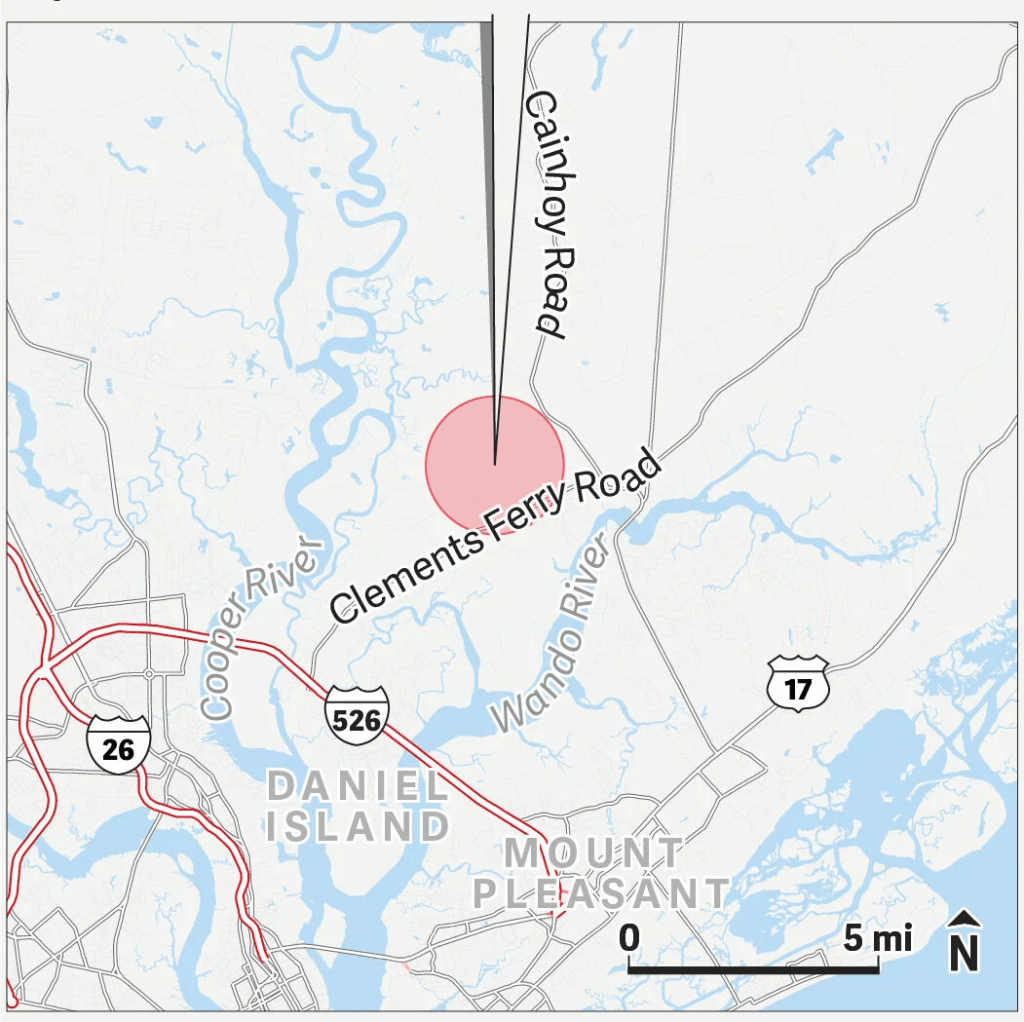
Atlanta-based PulteGroup‘s Del Webb unit has broken ground on its 55-plus Cainhoy peninsula project. The neighborhood sits on a 502-acre parcel along Beech Hill Drive. It’s within the 9,000-acre master-planned Point Hope development.
Plans for the golf-cart friendly community, Del Webb Pointe Hope is aiming to open by early next year.
The new Del Webb community will be located in the Charleston area near the juncture of Clements Ferry and Cainhoy roads in the city of Charleston in Berkeley County.
Pointe Hope is Del Webb’s third 55-plus housing project in the Charleston region, all in Berkeley County. The first, in Cane Bay, has sold out. Another in the Nexton development in Summerville includes 1,400 homes. Del Webb has sold almost 900 homes in the last eight years.
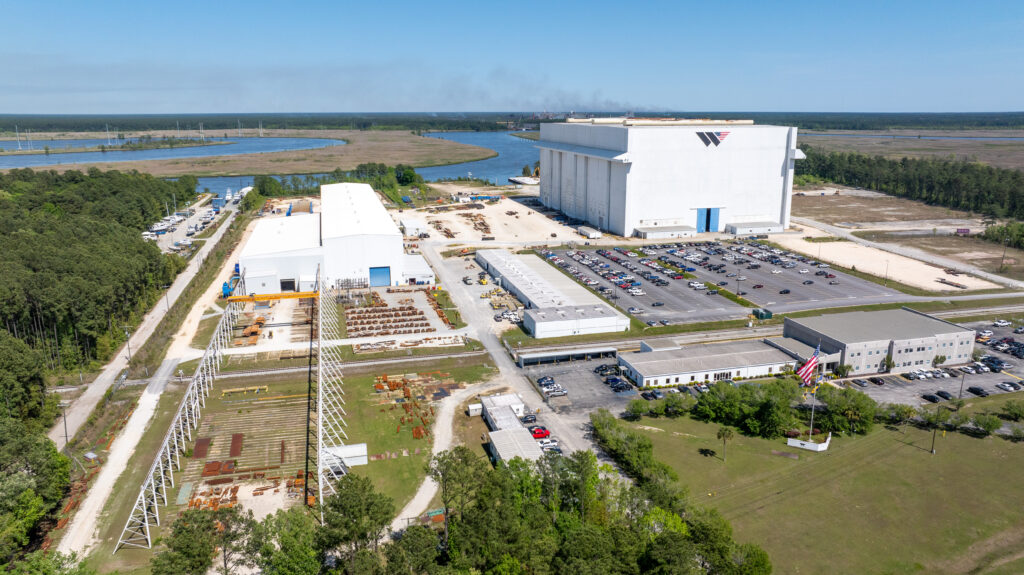
HII(NYSE: HII), a global defense provider, announced it selects Berkeley County to establish the company’s first South Carolina operation through the acquisition of substantially all of the assets of W International SC, LLC and Vivid Empire SC, LLC (collectively, “W International”), a South Carolina-based complex metal fabricator specializing in the manufacture of shipbuilding structures, modules and assemblies. Through its investment, HII anticipates creating over 250 new jobs.
Headquartered in Virginia, HII manufactures naval ships and defense technology solutions for customers including the U.S. Navy. The company has over 135 years of experience and currently has 44,000 employees nationwide.
In connection with the transaction, which was completed on Jan. 22, 2025, HII will invest in new equipment as well as retrofit the acquired facility, located at 2040 Bushy Park Road in Goose Creek, to meet HII’s manufacturing requirements. The renovated facility will operate within HII’s Newport News Shipbuilding division and serve as a manufacturing center in support of Virginia-class, Columbia-class and aircraft carrier programs.
The Coordinating Council for Economic Development approved job development credits related to the project. The council also awarded a $750,000 Set-Aside grant to Berkeley County to assist with the costs of building improvements.
South Carolina has officially become the number 1 moved to state in America, surpassing Texas. This significant change reflects a growing trend of people relocating to the number 1 moved to state, driven by various factors such as job opportunities, more affordable housing, and a desirable lifestyle. According to data from U-Haul, South Carolina has knocked Texas out of the number one spot for the first time in history.
The trend of southern states netting larger numbers of one-way U-Haul® continued during 2024, with South Carolina topping the U-Haul Growth Index for the first time.
Texas, North Carolina, Florida and Tennessee round out the five leading growth states.
California experienced the greatest net loss and ranks 50th for the fifth consecutive year.
Growth rankings are configured by each state’s net gain (or loss) of customers utilizing one-way U-Haul equipment in a calendar year. The U-Haul Growth Index is compiled from well over 2.5 million one-way U-Haul truck, trailer and U-Box® moving container transactions that occur annually.
“State-to-state transactions from the past year reaffirm customer tendencies that have been pronounced for some time,” stated John “J.T.” Taylor, U-Haul International president. “Migration to the Southeast and Southwest continues as families gauge their cost of living, job opportunities, quality of life and other factors that go into relocating to a new state. Out-migration remains prevalent for a number of markets across the Northeast, Midwest and West Coast — and particularly California.
“U-Haul continues to expand its network, rental fleet and self-storage footprint so that wherever people move in 2025, we will be there to meet their needs.”
South Carolina climbed three spots in the rankings to unseat Texas, which was the No. 1 growth state for the previous three years (2021-23). Of all the U-Haul movers coming and going from the Palmetto State in 2024, more than 51.7% were arrivals.
Texas has ranked first or second among U-Haul Growth States each year since 2016. Florida has been fourth or higher every year since 2015.
New York, at No. 47 on the list, has its lowest growth ranking in a decade.
Oklahoma (+30), Indiana (+19) and Maine (+18) are the biggest risers year-over-year on the U-Haul Growth Index. Colorado (-31), Nevada (-24), Wyoming (-22) and New Mexico (-21) saw the biggest slides in 2024.
A nearly 200-acre project is coming into 2025 along the Ashley River in the Charleston Neck area — Magnolia Landing — according to Clark Davis, CEO of Highland Resources.
The Houston firm’s long-term plan calls for up to 4,080 multifamily housing units, 1.2 million square feet of commercial space and 1,040 hotel rooms, with about 25 acres set aside for parks.
Decades ago, the tract near the King Street Extension and Milford Street housed businesses that left a toxic mix of contaminants in the soil. A North Carolina firm set out in 2002 to take on what was envisioned as the largest reuse of polluted land in South Carolina, but the effort collapsed into bankruptcy in 2016.
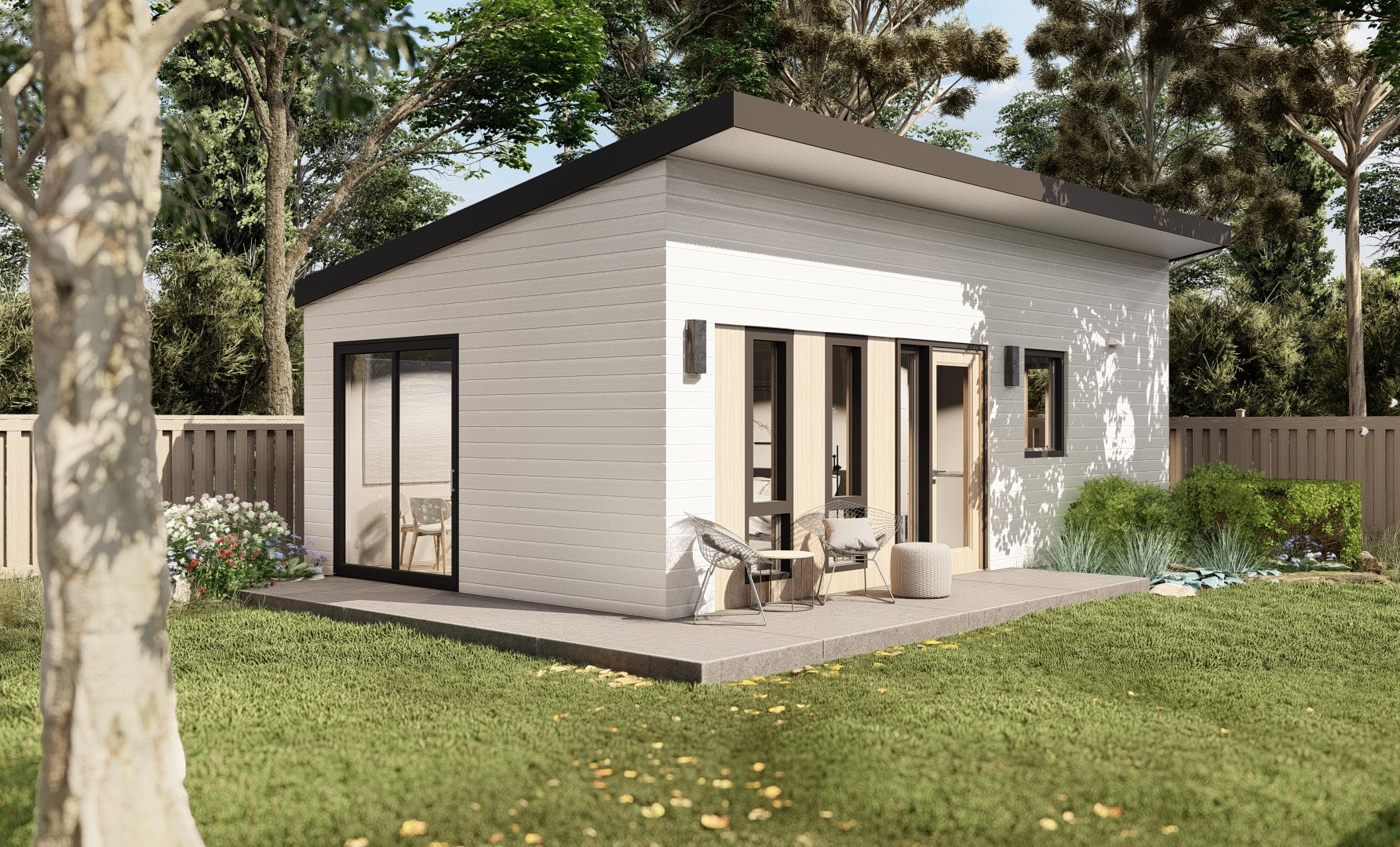
An accessory dwelling unit (ADU), sometimes called a carriage house or in-law suite, is a separate, detached living space with a kitchen, bathroom and sleeping area on the same property as a single-family home.
As the cost of housing continues to rise, local leaders are looking to allow these accessory dwelling units in residential areas to provide more housing options.
Leaders in the local government of North Charleston recently proposed a new ordinance that would allow homeowners to rent the separate unit to a long-term tenant, which would provide additional income to the homeowner and increase housing stock.
North Charleston currently allows ADUs in a few overlay districts, such as the Olde North Charleston Historic District and Neighborhood Conservation District, which covers a strip of Park Circle between Spruill and Virginia avenues. The new ordinance is aimed at areas like Park Circle where larger lot sizes can accommodate additional density, as opposed to already dense areas like Liberty Hill, Chicora-Cherokee and Accabee.
According to the proposed ordinance, an ADU cannot be more than two-thirds the size of the principal dwelling unit or exceed 800 square feet. The lot size must be at least 4,500 square feet. An additional off-street parking spot for the ADU must be provided. All ADUs must be permitted by the city.
It’s intentional that these additional units are small, said Tim Macholl, the city’s director of planning and zoning, during a November committee meeting. He said the space is ideal for a college student who is spending the summer at home or in-laws staying in town. It also provides an opportunity for additional income for homeowners if they choose to rent it out, he added. However, these units are not eligible for short-term rental permits, so they can not be used for vacation rental services, like Airbnb.
The demand for ADU’s is on the rise. They offer some affordable housing solutions, an option for multi-generational living and versatility of home space as they can be used as home offices, living spaces or possibly rentals.
Goose Creek also has previsions in their ordinance for ADU’s and many other municipalities are incorporating guidelines as well to accommodate the ADU trend.
If you are considering an ADU, check with your local municipality and Homeowner Association to make sure they are allowed and to obtain the guidelines, rules and permitting requirements.









 Real Estate Matters in Charleston SC - Gena Glaze