When deciding to buy a home, people are presented with many different options. The type of home you buy depends on your needs, budget, and in many cases, the desired maintenance level. For many millennials, their choice has been buying a condominium!
“Last year about 43% of all condo home-purchase mortgage applications were submitted by FTHBs… Similarly, the data show condos were more popular with young homebuyers and empty nesters. For instance, 21% of all condo home-purchase mortgage applications were submitted by buyers aged 18 to 30, compared with just 17% of all single-family home-purchase mortgage applications by the same group in 2018.”
With home prices increasing year-over-year, it makes sense millennials are buying condos instead of a single-family house. As a result, the demand for this type of home has been increasing.
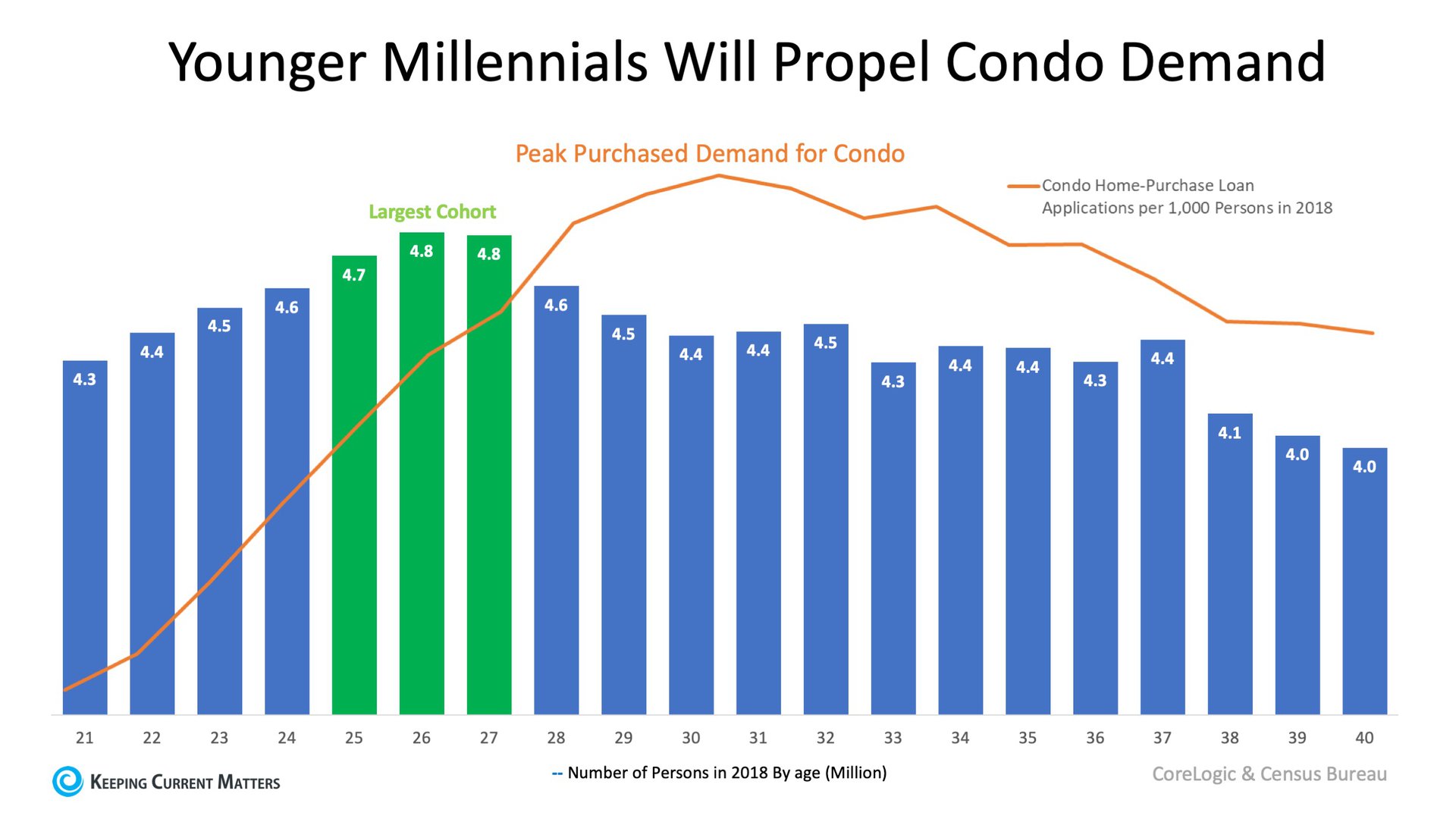
As this graph explains,
“The younger millennials are the largest cohort and are likely to drive much of the condo demand in the coming years”.
Bottom Line
If you are a millennial considering buying a home, understand that there are many options available. You may find yourself in a condominium as your first home. If you would like to determine which type of home best fits your needs, sit down with a real estate professional that can help evaluate your options!
Real estate has outranked stocks/mutual funds, gold, savings accounts/CDs, and bonds as the best long-term investment among Americans for the last 6 years.
Stock owners are more positive about real estate than stocks as an investment.
Of the 4 listed, real estate is the only investment you can also live in!
The market is Steady with Median sales price increases… We are halfway through 2019, here is how the market is fairing by county….
Berkeley County
503 homes sold at a median price of $223,250 in Berkeley County in June, 433 single-family homes and 70 Condos/townhomes. Year-to-date, single-family home sales have increased 4.4% in the County, as the median home price has increased by nearly 8%, to $259,900. Condo and townhome sales are up 1.6% as median price is up over 7% to $174,950 so far this year.
There are currently 1,035 residential properties for sale in Berkeley County; 921 single-family homes and 114 condos/townhomes.
971 homes sold at a median price of $315,000 in Charleston County in June, 738 single-family homes and 233 Condos/townhomes. Single-family home sales have slowed 3.6% this year, as median home price is up 1% to $385,000. Condo and townhome sales have declined by 3.4% as median price has increased 2.6% to $235,000 so far this year.
There are currently 3,407 residential properties for sale in Charleston County—2,518 single-family homes and 889 condos/townhomes.
25 homes sold at a median price of $222,250 in Colleton County in June, 20 single-family homes and 5 Condos/townhomes. Single-family home sales have declined nearly 19% this year, as median home price increased 5% to $200,000. Condo and townhome sales have increased over 7% as median price has declined 15.4% to $143,900 so far this year.
There are currently 192 residential properties for sale in Colleton County—176 single-family homes and 16 condos/townhomes.
352 homes sold at a median price of $216,475 in Dorchester County in June, 311 single-family homes and 41 Condos/townhomes. Single-family home sales declined by 3% in the County, as median home price is up 7% so far this year, to $252,000. Condo and townhome sales saw a decline of nearly 10% as median price increased nearly 9% to $169,900 for the year.
There are currently 697 residential properties for sale in Dorchester County—635 single-family homes and 62 condos/townhomes.
There are many financial benefits to homeownership, but probably none more important than its ability to create family wealth.
How Housing Matters is a joint project of the Urban Land Institute and the MacArthur Foundation. It is an online resource for research and information on how homeownership contributes to individual and community success.
“The ladder to economic success can stretch only so high without the asset-building power of homeownership.”
To this point, National Association of Realtors’ (NAR) Economists’ Outlook Blog revealed in a recent post:
“Housing wealth contributes positively to the homeowner’s and children’s economic condition, because home equity can be tapped for expenditures such as investing in another property (which can generate rental income), home renovation (which further increases the home value), a child’s college education, emergency or major life events, or expenses in retirement…
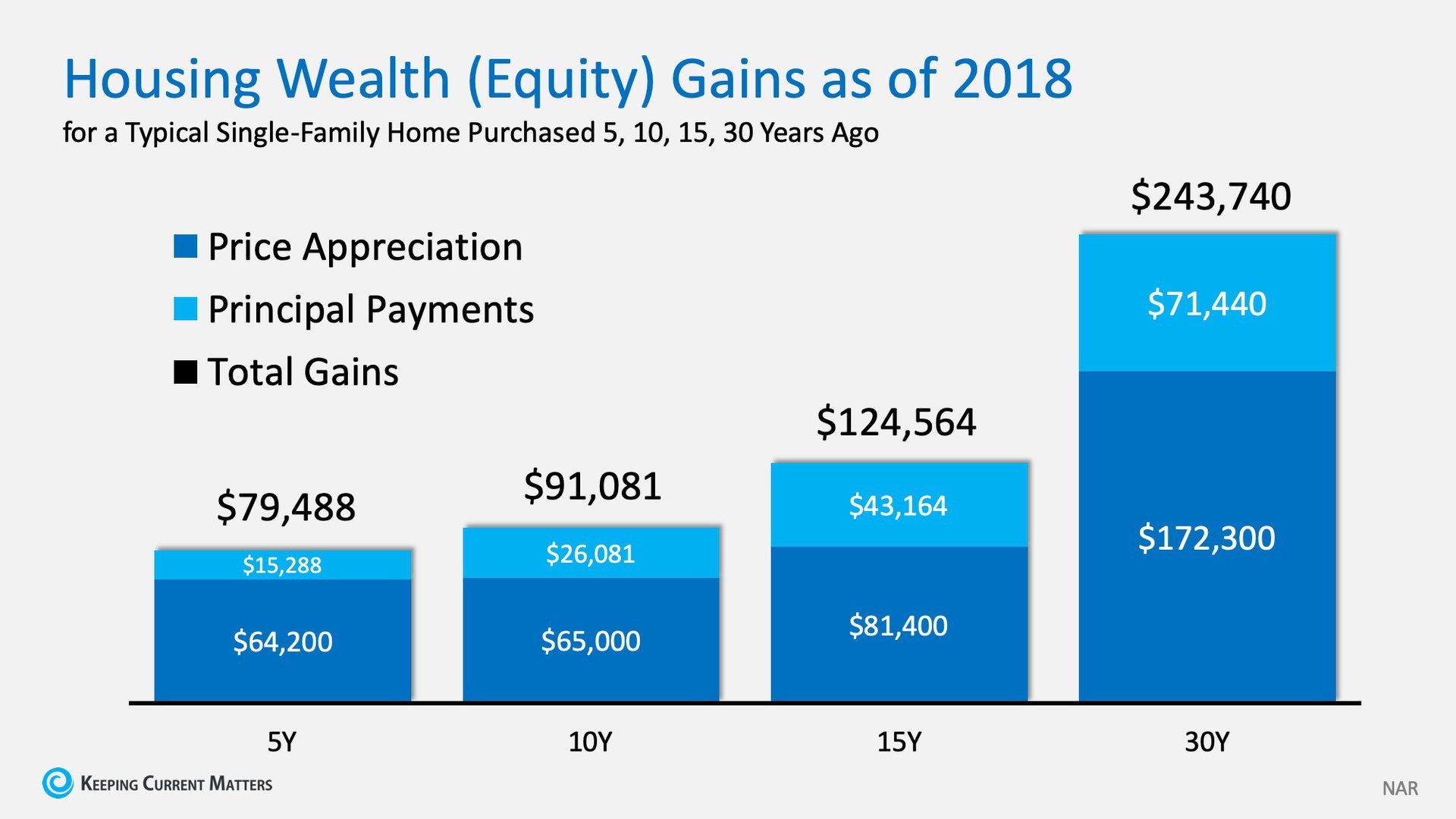
Housing wealth (or net worth or equity) is built up over time via the home price appreciation and the principal payments that the homeowner makes on the loan.”
Just last month, NAR’s Chief Economist, Lawrence Yun, explained that even though home appreciation has slowed, homeowners are still building wealth:
“Homeowners in the majority of markets are continuing to enjoy price gains, albeit at a slower rate of growth. A typical homeowner accumulated $9,500 in wealth over the past year.”
Later in life, this wealth is crucial…
This wealth is important to a family’s retirement plans. In a recent report from the Joint Center for Housing Studies at Harvard University titled, Housing America’s Older Adults 2018, they revealed that a renter 65 years old or older has a net worth of $6,710. Meanwhile, a homeowner 65+ years old has a net worth of $319,200. That huge difference will allow for a dramatic upgrade in one’s lifestyle during your retirement years.
Bottom Line
Homeownership builds wealth. This, in turn, allows families to have more and better options when it comes to their children and their life in retirement.
The Post and Courier recently reported that Some of South Carolina’s population growth hot spots have cooled. The data is from just-released census estimates, but new residents continued to pour in to Horry and Berkeley counties, the counties adjacent to Charlotte, and — perhaps surprisingly — Spartanburg.
The Palmetto State has been a fast-growing region for years and that continued through mid-2018. The state added 62,908 residents. More than 80 percent of the growth came from people relocating from other states, the Census Bureau estimated.
The additions raised the state’s population to 5,084,127.
The growth has generally been concentrated along the coast and along the Interstate 85 corridor in the Upstate. However, the places with the most rapidly growing populations in South Carolina keep changing, partly due to the availability of jobs and housing.
Berkeley County is an example. The county is home to multiple town-sized housing developments including Cane Bay, Nexton and Carnes Crossroads that are attracting new residents near the Summerville area.
On Berkeley County’s Cainhoy peninsula above Daniel Island, the Cainhoy Plantation development is expected to have 9,000 new homes.
The Nexton development off Interstate 26 near Summerville is eventually expected to have 10,000 homes, more than 6 million square feet of commercial space and more than 50 miles of trails.
Population growth has slowed rather dramatically in Charleston and Dorchester counties — falling by more than 50 percent since 2015 — while Berkeley has become the second-fastest-growing county in the state. The three counties together represent the Charleston metro area.
In 2015, the Charleston metro area was gaining 50 new residents every day, and Charleston County accounted for more than half the growth. By, 2018 that slowed to an average gain of 34 people each day, with half of those tri-county population gains going to to Berkeley County.
“I have people that I take around Charleston County, Berkeley County and Dorchester County, and they see what (homes) they can get in each place,” said Kimberly Lease, a Realtor with Century 21 Properties Plus. “Some people really want to be near downtown Charleston or the beaches, but if that’s not an issue, they almost always go to Berkeley out by Cane Bay.”
“It’s interesting how far people will drive for affordable housing,” she said. “There’s so much land in Berkeley County that there’s a ton of new construction.”
In Horry County, people moving from elsewhere accounted for all of the 11,496 one-year gain in population — and then some. More than 12,000 people moved to the county.
But the county also is home to many retirees and has more deaths than births each year, so its latest increase in population was slightly smaller than the number of people actually moving there.
Other South Carolina counties that have seen strong growth — including Charleston, Dorchester and Greenville — are gaining population from both robust birth rates and from people moving in. About a third of the growth in Charleston and Dorchester counties last year came from the birth rate.
One South Carolina surprise in the latest census report, which was publicly released Thursdaymorning, was Spartanburg County.
Through mid-2018, the Spartanburg metropolitan area was the 19th-fastest-growing in the nation out of 383 total. Spartanburg County accounted for all of that growth, and the county was the fifth-fastest-growing in the state.
“That does not shock me, as a local business owner,” said Molly Cashman, co-owner of Blue Moon Specialty Foods in Spartanburg. “Our downtown is really seeing a revival.”
Cashman said that when she returned to her native Spartanburg nearly six years ago after living in Greenville and Charleston, there were lots of empty storefronts downtown. That’s no longer the case, she said.
“There’s been a lot of emphasis on downtown living, which has really been cool,” Cashman said. “There’s been a sizable number of new apartments. Really nice, high-quality downtown apartments.”
Once known for textile mills, Spartanburg County is now known for manufacturers, including BMW, and it sits along the I-85 corridor connecting Charlotte, Greenville and Atlanta. Spartanburg County gained more population from mid-2017 to mid-2018 than Charleston and Dorchester counties combined — 7,256 people.
Most residents of the county live outside the city of Spartanburg, which is home to about 12 percent of the county’s population, the state’s largest private art collection and a growing hospitality industry. Greenville-Spartanburg International Airport is in Spartanburg County, except for a portion of the runways, and so is the State Ports Authority’s Inland Port Greer.
South Carolina’s York and Lancaster counties are now considered bedroom communities for Charlotte, a metro area that was the nation’s 47th-fastest-growing. York and Lancaster were also South Carolina’s third- and fourth-fastest-growing counties.
The only other counties that saw population growth greater than the state as a whole were Jasper, Greenville and Lexington.
Of course, not every county has been experiencing a growing population. Twenty of South Carolina’s 46 counties lost population during the most recent year; most of them were rural counties facing the double-whammy of a negative birth rate and more residents leaving than arriving.
Combined, those 20 counties lost an estimated 4,348 residents, while the remaining 26 counties gained 67,256.
According to a new survey from Move.com, the wave of first-time homebuyers hitting the market this summer has resulted in an interesting statistic. Nearly 60% of buyers searching for a home this spring are willing to consider buying a fixer-upper, with 95% believing that the projects needed will increase their new home’s value!
Realtor.com’s Chief Economist, Danielle Hale, pointed to low-inventory at the entry-level price range for the increase in willingness to renovate.
“The combination of rising home prices and limited entry-level homes for sale is prompting many home shoppers to consider homes that need renovating.
Replete with inspiration at their fingertips – like Pinterest, Instagram, and various home renovation TV shows – some home shoppers are comfortable tackling home renovation jobs to find a home that balances their needs with their budget.”
Just over half of all respondents who said they would be willing to buy a home in need of some TLC, would also spend more $20,000 to make the home fit their needs.
The most common ‘expected’ renovation is a kitchen remodel which can run anywhere from $22,000 for a minor remodel to $66,000 for a major remodel.
This isn’t a new trend by any means. According to the Joint Center for Housing Studies at Harvard University,home improvement project spending reached a new high in 2018.
“Americans spent $336.9 billion on remodeling projects, up 7.4% from the $313.6 billion a year earlier.”
Home renovation television shows have given many buyers hope that they could renovate a home they can afford into their dream home!
Bottom Line
If you are one of the many Americans considering buying a home this spring, meet with a local real estate professional who can help you find a house with the potential to be your dream home!
Last week, realtor.com released a survey of active home shoppers (those who plan to purchase their next home in 1 year or less). The survey asked their opinion on an impending recession and its possible impact on the housing market.
Two major takeaways from the survey:
42% believe a recession will occur this year or next (another 16% said 2021)
59% believe the housing market would fare the same or worse than it did in 2008
Why all the talk about a recession recently?
Over the last year, four separate surveys have been taken asking when we can expect the next recession to occur:
70% of all respondents to the four surveys believe that a recession will occur in 2019 or 2020 with an additional 18% saying 2021.
However, we must realize that a recession does not mean we will experience another housing crash. According to the dictionary definition, a recession is:
“A period of temporary economic decline during which trade and industrial activity are reduced, generally identified by a fall in GDP in two successive quarters.”
During the last recession, a dramatic fall in home values helped cause it.
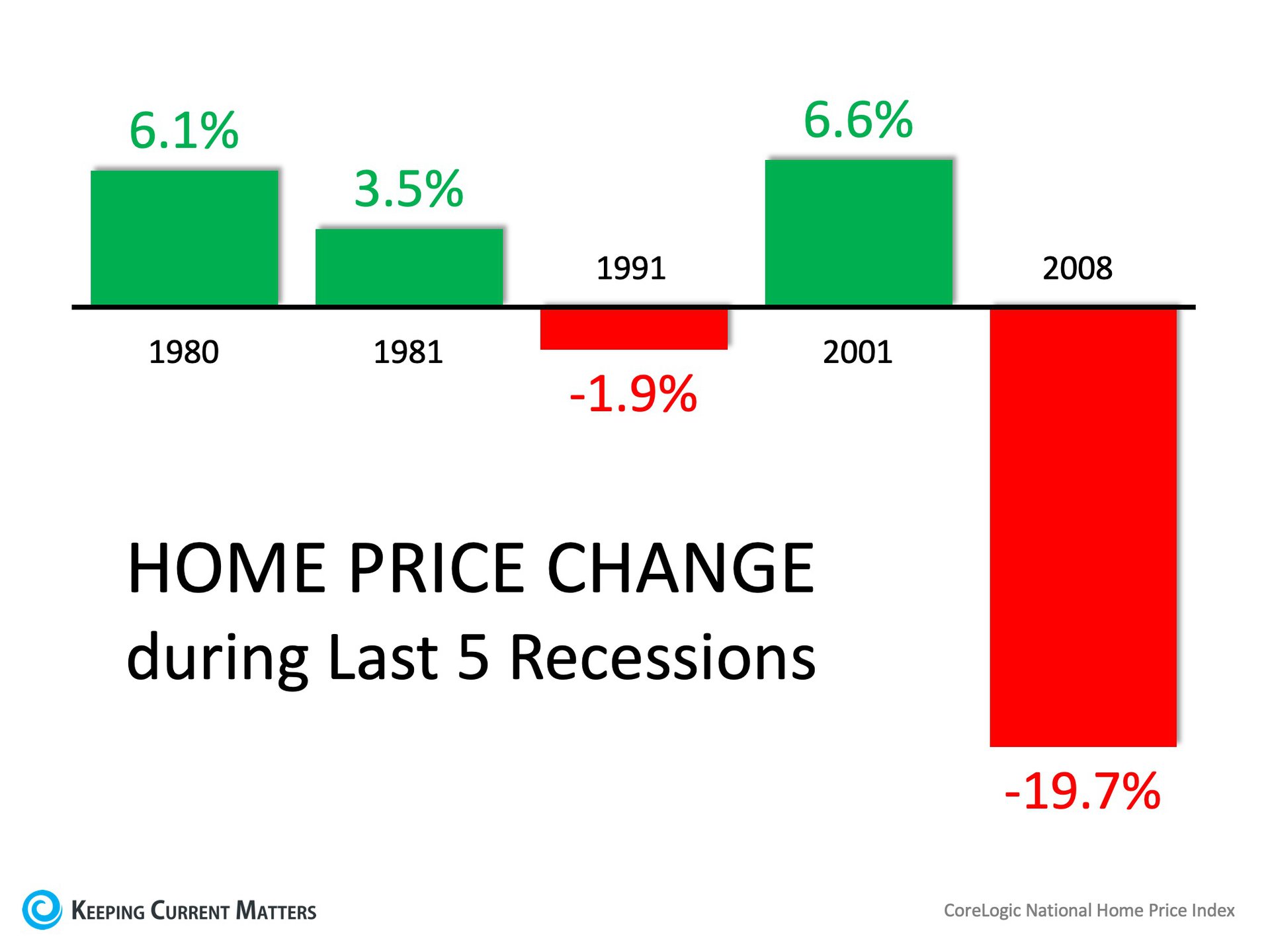
However, according to research done by CoreLogic, home values weren’t negatively impacted as they were in 2008 during the previous four recessions:
During the four recessions prior to 2008, home values depreciated only once (at a level that was less than 2%). The other three times home values appreciated, twice well above the historic norm of 3.6%.
Bottom Line
If there is an economic slowdown in our near future, there is no need for fear to set in. Most experts agree with Ralph McLaughlin, CoreLogic’s Deputy Chief Economist, who recently explained that there’s no reason to panic right now, even if we may be headed for a recession.
“We’re seeing a cooling of the housing market, but nothing that indicates a crash.”
Rising home prices have many concerned that the average family will no longer be able to afford the most precious piece of the American Dream – their own home.
However, it is not just the price of a home that determines its affordability. The monthly cost of a home is determined by the price and the interest rate on the mortgage used to purchase it.
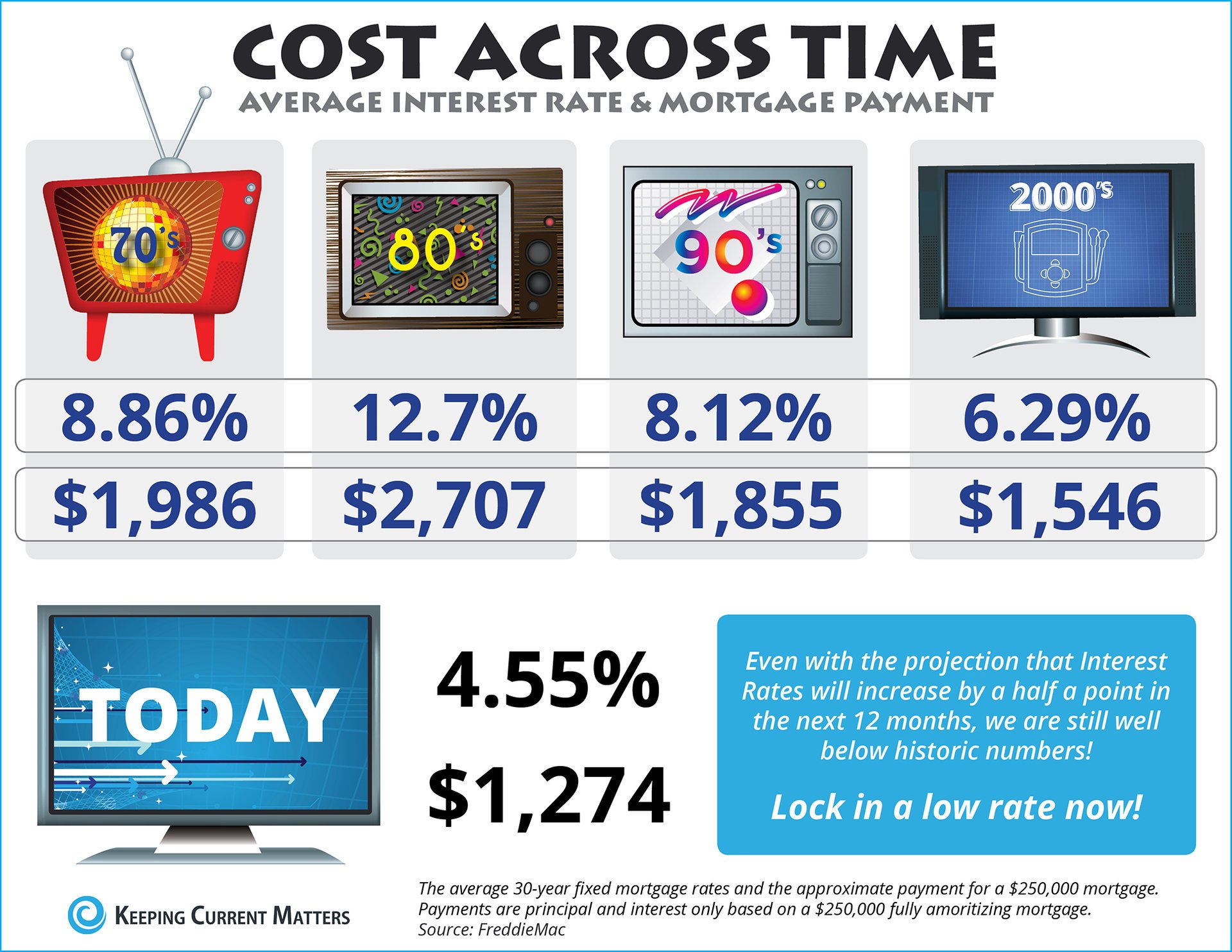
Today, mortgage interest rates stand at about 4.5%. The average annual mortgage interest rate from 1985 to 2000 was almost double that number, at 8.92%. When comparing affordability of homeownership over the decades, we must also realize that incomes have increased.
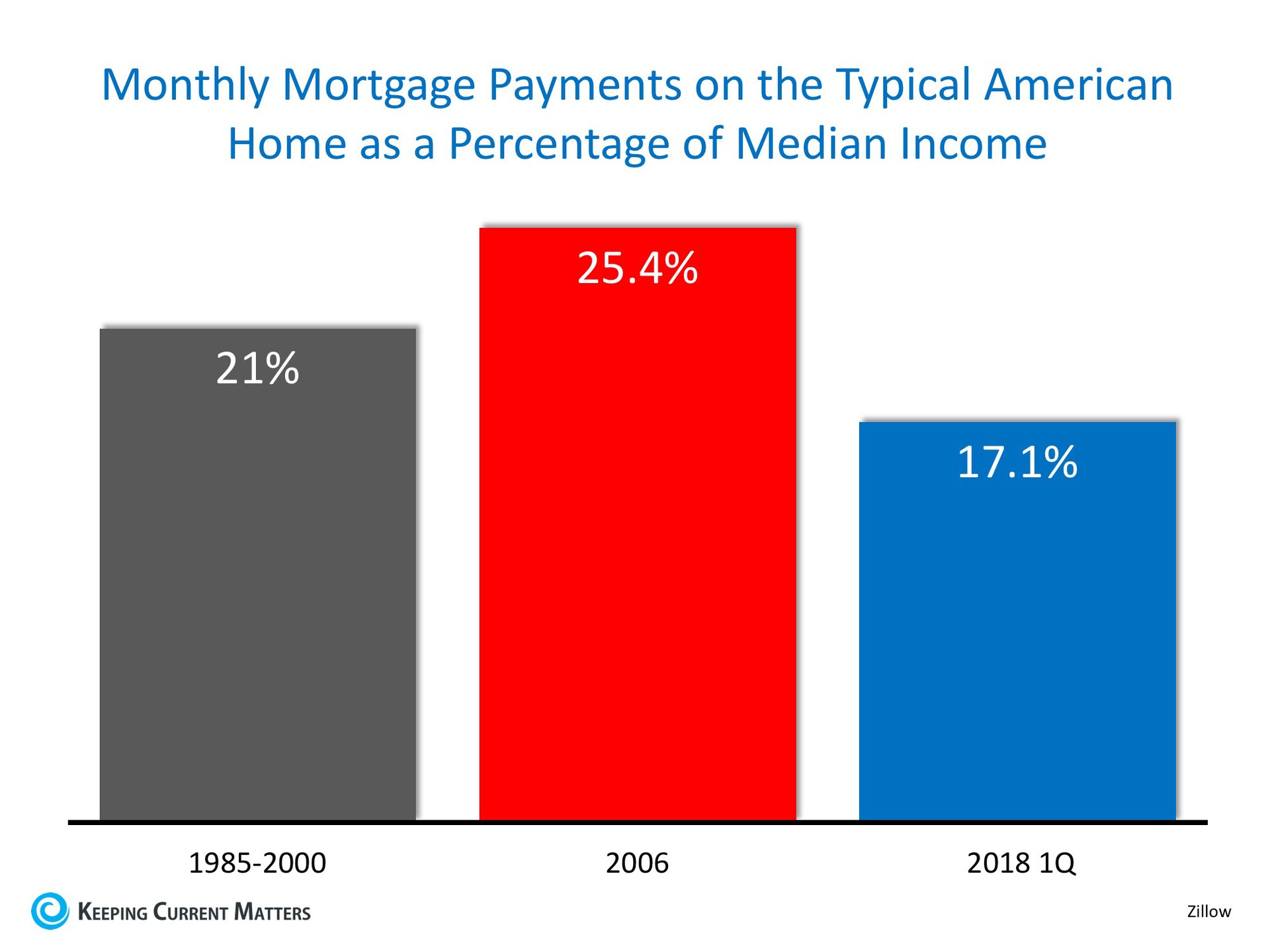
This is why most indexes use the percentage of median income required to make monthly mortgage payments on a typical home as the point of comparison.
Zillow recently released a report comparing home affordability over the decades using this formula. The report revealed that, though homes are less affordable this year than last year, they are more affordable today (17.1%) than they were between 1985-2000 (21%). Additionally, homes are more affordable now than at the peak of the housing bubble in 2006 (25.4%). Here is a chart of these findings:
What will happen when mortgage interest rates rise?
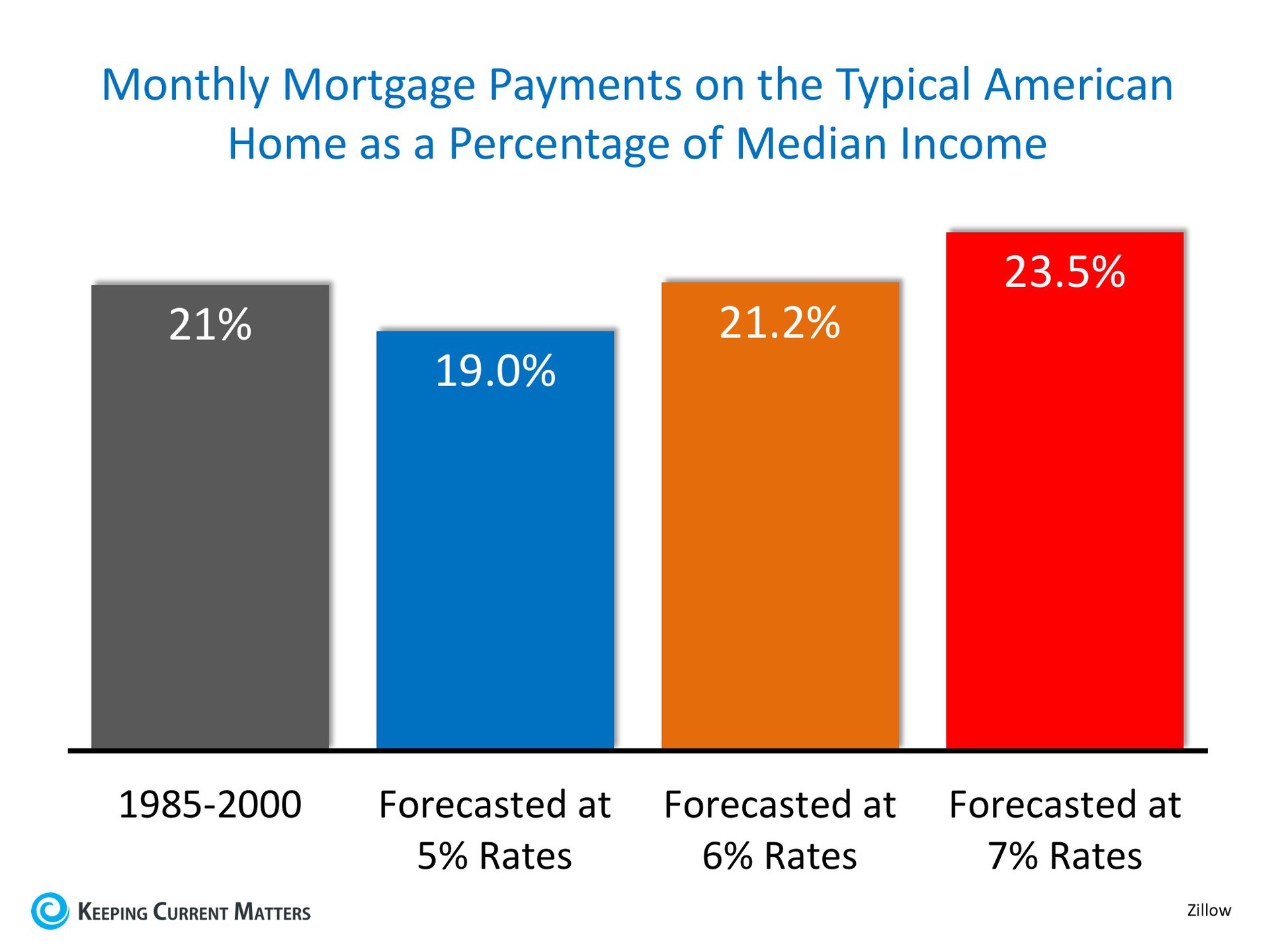
Most experts think that the mortgage interest rate will increase to about 5% by year’s end. How will that impact affordability? Zillow also covered this in their report:
Rates would need to approach 6% before homes became less affordable than they had been historically.
Bottom Line
Though homes are less affordable today than they were last year, they are still a great purchase while interest rates are below the 6% mark.


![Americans Rank Real Estate Best Investment For 6 Years Running! [INFOGRAPHIC] | Keeping Current Matters](https://files.keepingcurrentmatters.com/wp-content/uploads/2019/06/04095253/20190628-KCM.jpg)